Bistable auxetic surfaces across scales
One flat pattern that deploys into a curved shell, from a silicon wafer to an aluminium dome
A sheet tiled with bistable auxetic cells deploys from flat into a doubly curved surface. Each cell expands under tension and latches in a second stable state, and a spatially varying expansion makes the sheet buckle into a prescribed shape and hold it with no frame, mould, or applied load. The cut pattern is computed from the target surface by conformal flattening, cell by cell from a precomputed library. The same computation serves three scales.
Micrometres: the wafer
Written by photolithography in polyimide on a silicon wafer, the pattern deploys into free-standing shells at the micron scale: a dome, a model cornea, and a paraboloidal reflector that focuses a laser. See Deployable wafer devices.
Centimetres: rubber sheets
Laser-cut rubber sheets tens of centimetres across gave the first demonstrations: spherical caps, a seamed cylinder, and architectural freeform surfaces that deploy by hand and match their targets to within a few percent. See Bistable auxetic surface structures.
Metres: aluminium sheet
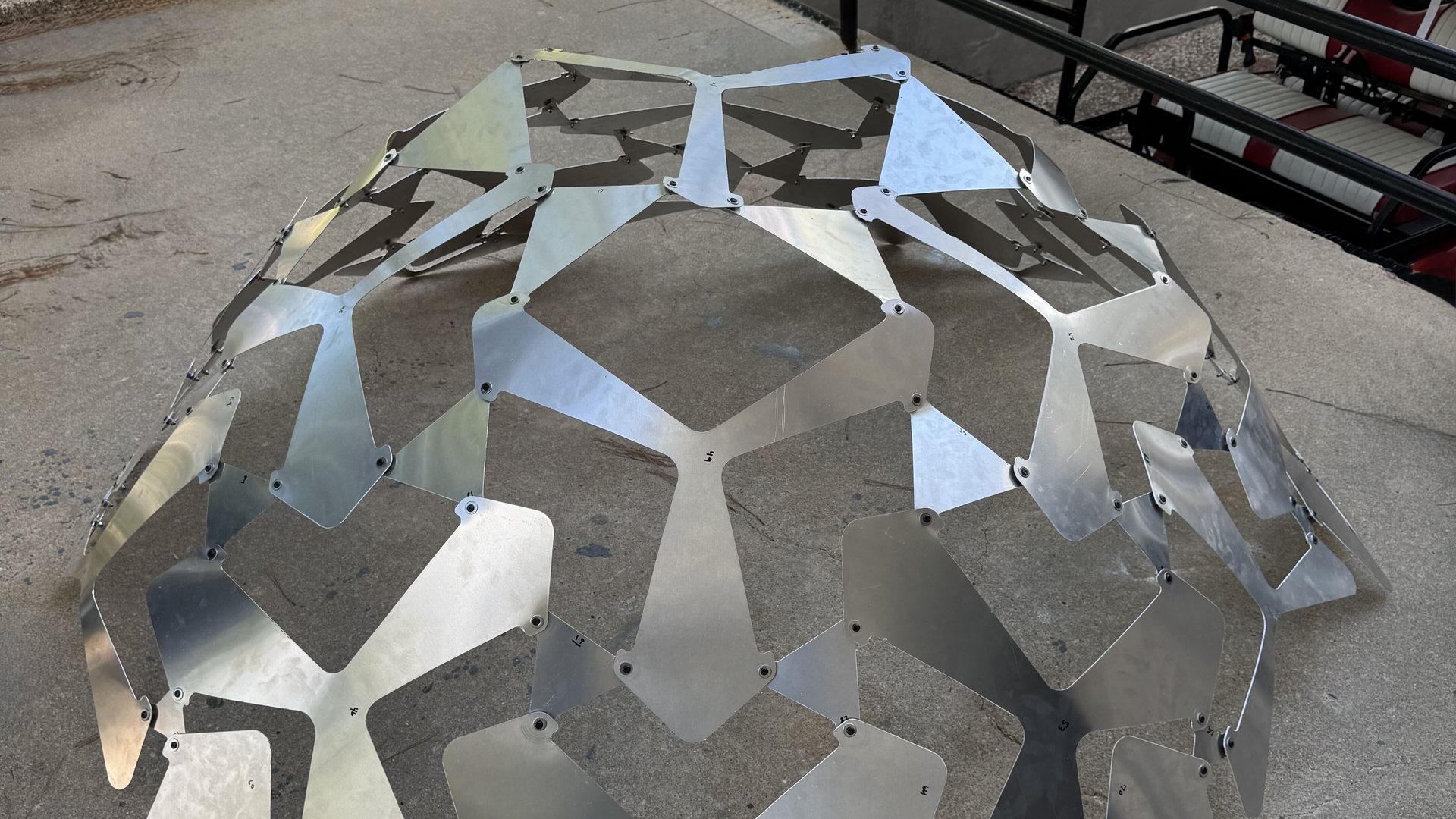
Scaled up, the pattern is cut from aluminium sheet as separate plates, numbered and joined at the hinges with rivets. Laid flat on the ground, the assembly deploys into a self-supporting dome about 1.5 m across.
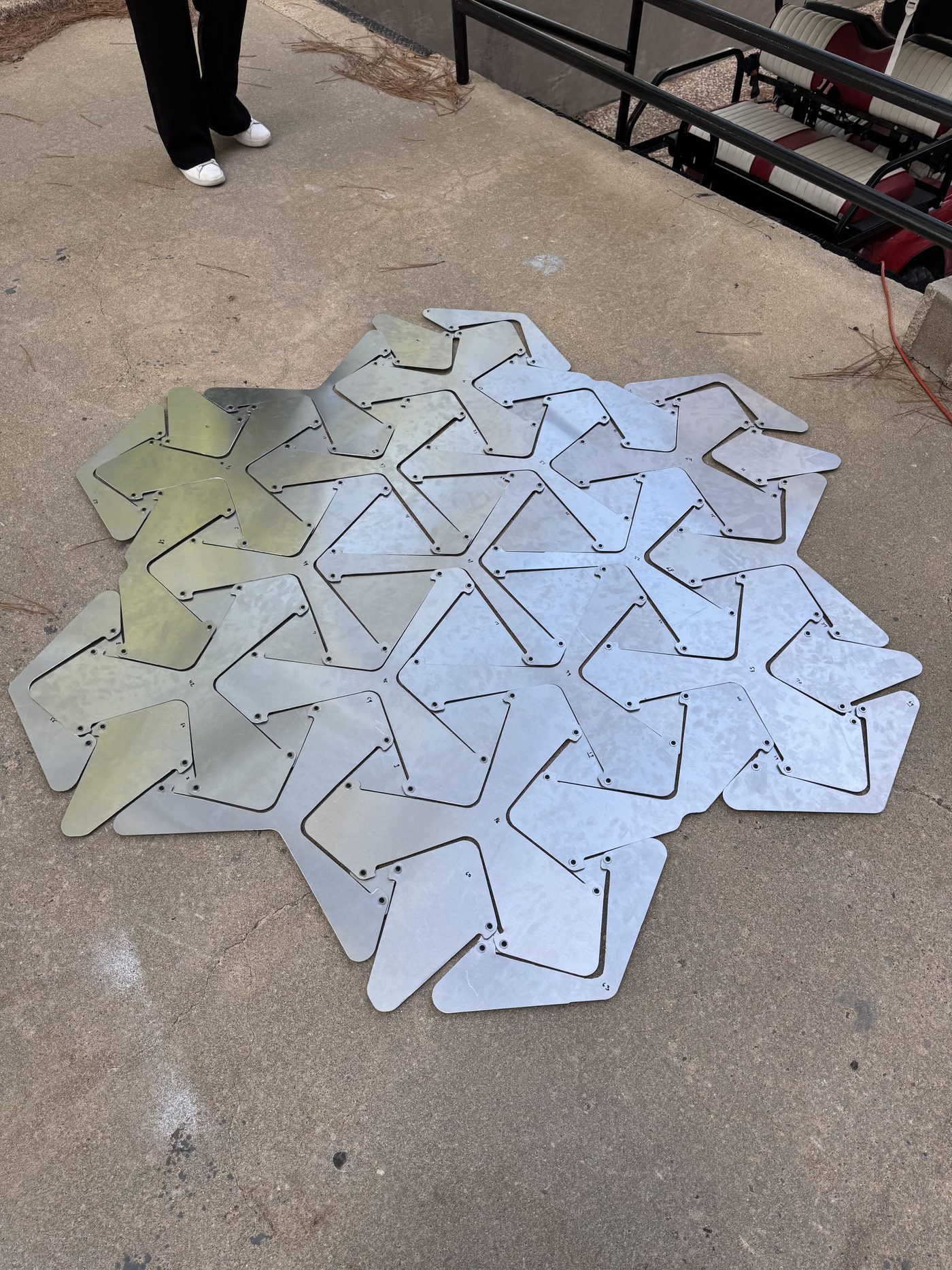
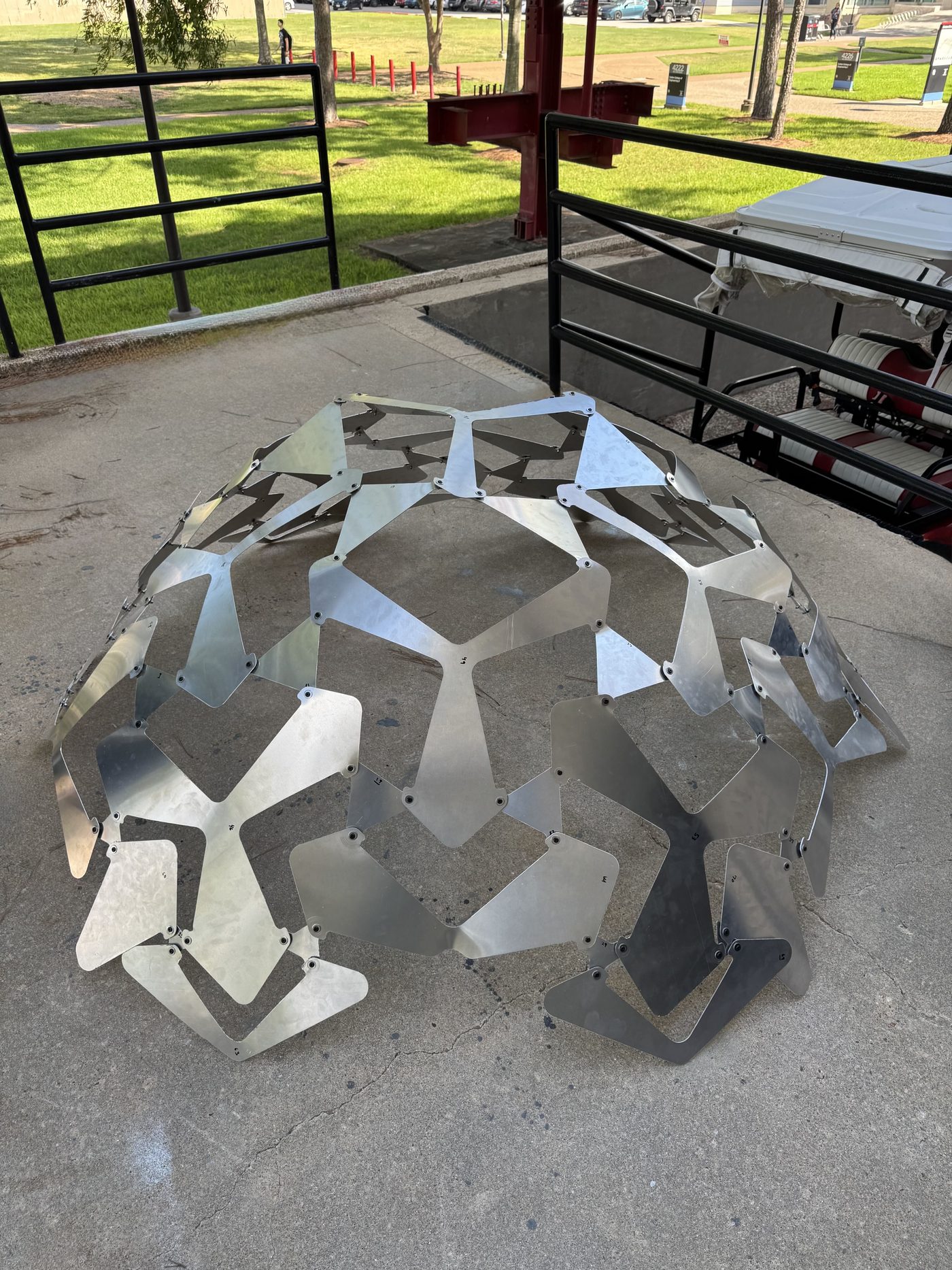
Across the three, the material and the hinge change, from a polymer film with compliant hinges, to an elastomer, to aluminium plates riveted at the joints, while the geometry stays the same.