Teaching

Teaching is an integral part of our laboratory practice. We embed our research outputs in the modules we teach, and we bring students into the lab to take part in research. The modules we are responsible for, and the student projects we offer, are listed below.

Course Modules

AE203 Engineering Practice 1 - Manufacturing

Imperial College London, Department of Aeronautics

This module introduces first-year aeronautics students to the principal manufacturing process families (casting, bulk and sheet forming, machining, joining, powder and additive processes, and composites), with an emphasis on digital, CNC, and algorithmic methods, taught through recurring aerospace case studies and supported by hands-on computational and workshop labs.

Interactive 3D models

  • Sand casting mold - A two-part sand mold: the cope and drag flasks with their sand, the core, the pouring basin and gating system, and the casting they produce.
  • Single-crystal turbine blade casting - Directional solidification of a turbine blade: a ceramic shell mold on a water-cooled chill plate is withdrawn from a radiant furnace. Grains grow up from the chill through the starter block, one survives the pigtail selector, and that single grain fills the root, platform, airfoil and shroud.
  • Tube extrusion with a spider die - Hot extrusion of a tube: the ram pushes the billet through the container into the die, where four legs hold the mandrel. The metal splits round the legs, welds back together in the chamber behind them, and leaves as a tube with four seam welds.
  • Turbine blade shape - a blade as a stack of airfoil sections.
AE203 Engineering Practice 1 Manufacturing

Solid Mechanics

University of Houston, Dept of Mech and Aero Eng

Fundamentals of continuum mechanics: tensorial representations of stress and strain states, constitutive behaviour, and the mechanics of one-dimensional structures: stretching, torsion, beam bending, and buckling.

Interactive applets

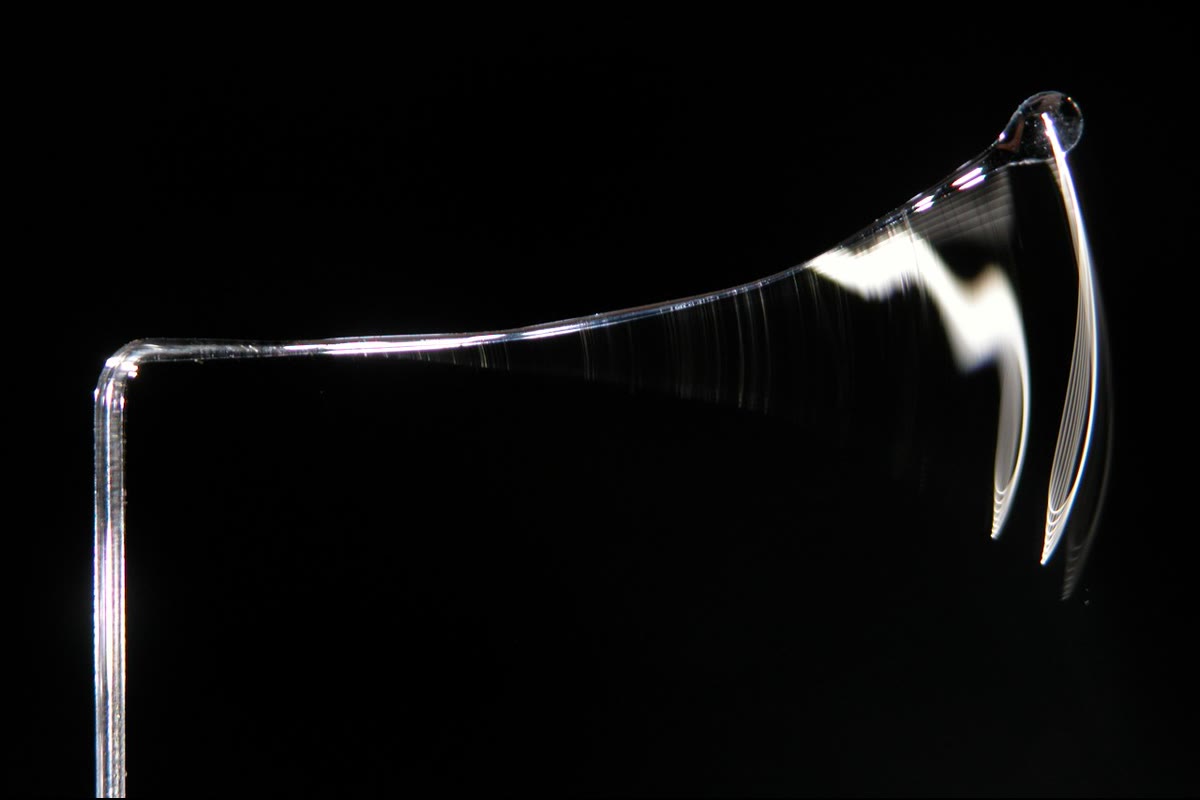
A slender elastic rod whipping back after release, photographed in a long exposure

Computational Optimization of Structures and Materials

University of Houston, Dept of Mech and Aero Eng

Formulation of design problems as optimization problems: objective functions and constraints, sensitivity analysis and gradient-based methods, and size, shape, and topology optimization of structures, with application to the inverse design of architected materials in a computational project.

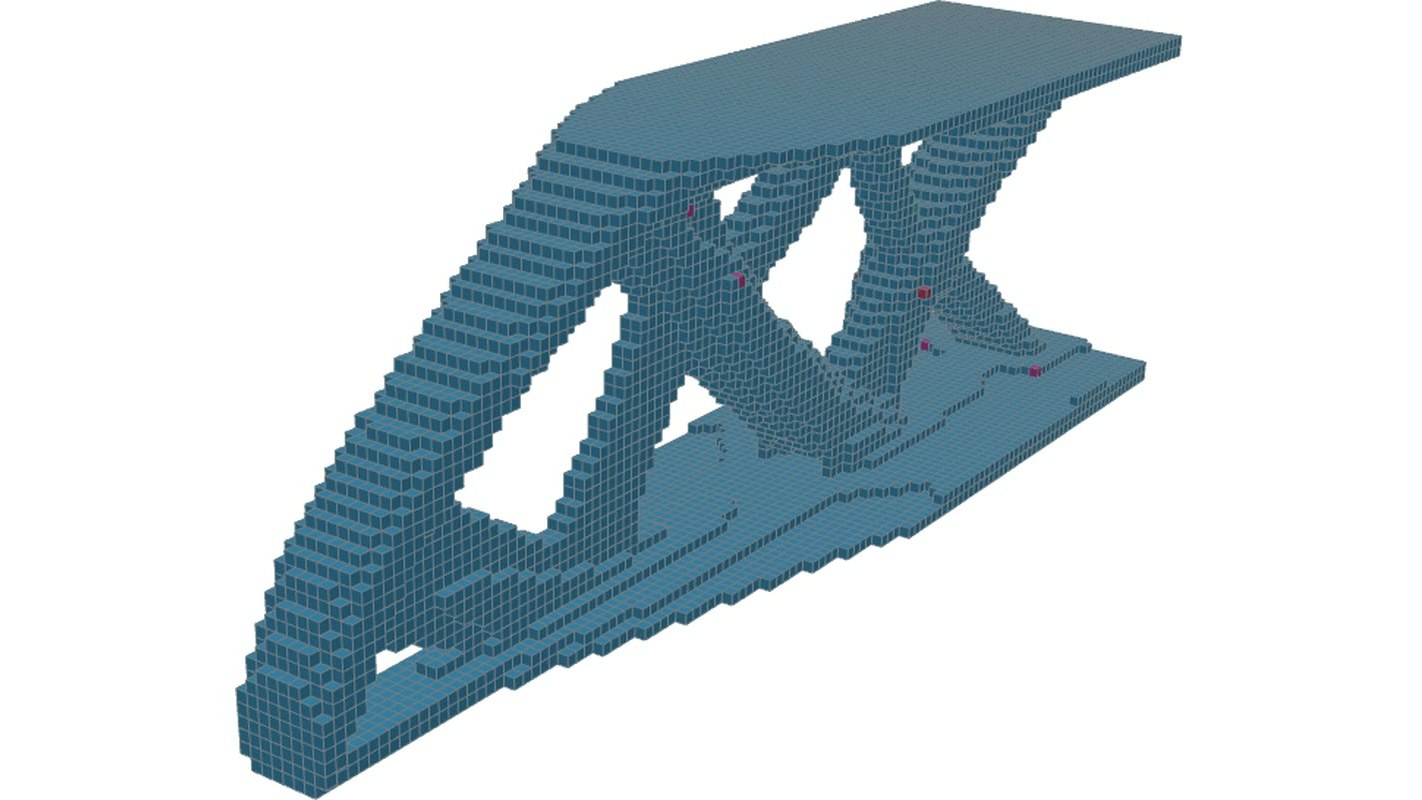
A topology-optimised cantilever rendered as blue voxels, with load points marked in red

Materials Science

University of Houston, Dept of Mech and Aero Eng

An introduction to structure-property relationships in engineering materials: bonding and crystal structure, defects and diffusion, phase diagrams and microstructure, mechanical behaviour and failure, and the selection of metals, polymers, ceramics, and composites.

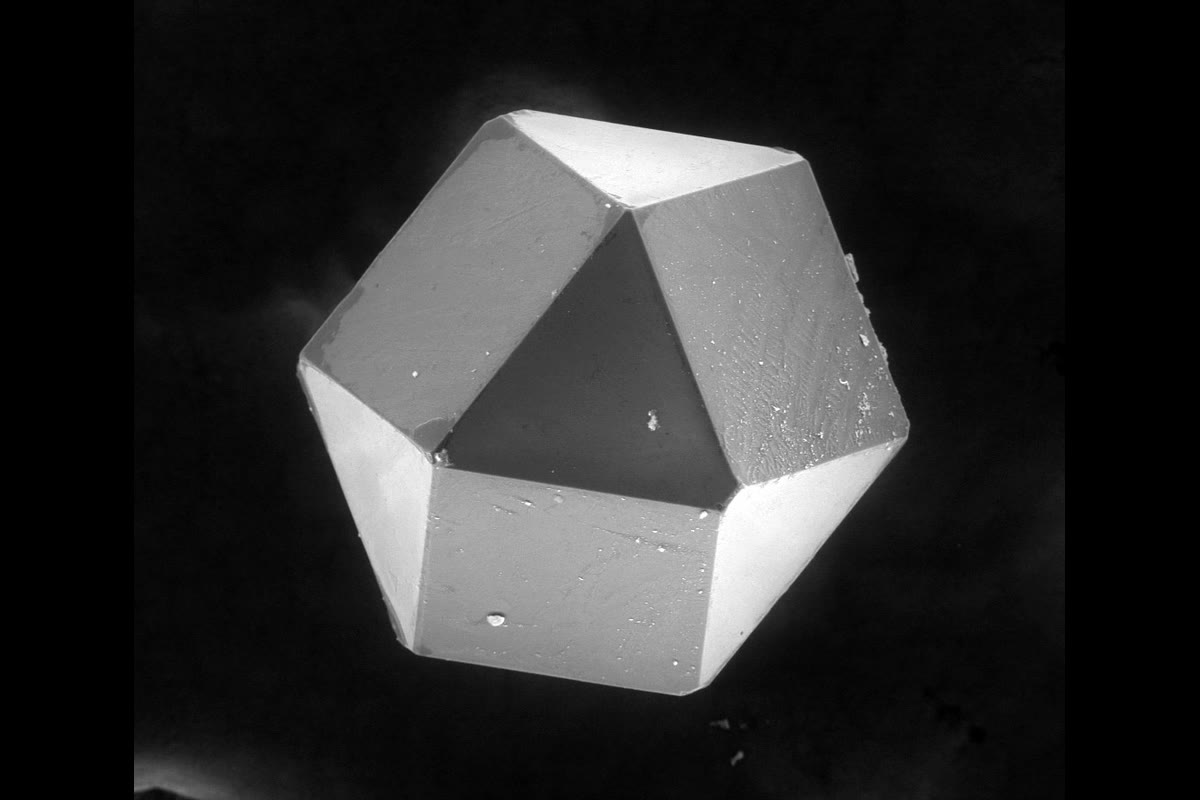
Scanning electron micrograph of a faceted single crystal

Final-year projects

The final-year individual project is the research project of the last year of Imperial's undergraduate engineering degrees. Students work individually, supervised by an academic, on a project that can be experimental, theoretical, computational, or design-related. They choose from a list of suggested projects, usually related to the supervisor's research, or propose their own. At the end of the academic year the work is presented in a seminar and displayed in a public poster session.

Final-year projects in the AIM Lab are drawn from the group's current research. Each project addresses a specific open question, scoped so that a student can complete it within the academic year. Students work with the PhD researcher or postdoc whose research the project extends, use the group's equipment and code, and present their results at group meetings as well as at the departmental seminar and poster session.

What a project looks like

Most projects combine two of the group's three research areas: geometry processing, dissipative and multistable mechanics, and fabrication. Typical examples are the design, printing, and testing of a flat pattern that deploys into a prescribed curved surface, or a reduced-order model of a multistable lattice validated against experiments in the lab. The AIM Lab is primarily experimental, with numerical and theoretical support; most projects include the fabrication and testing of specimens.

Who can apply

Final-year students in the Department of Aeronautics at Imperial College London, through the department's project allocation process. Students from other departments may apply - for example through the Department of Mechanical Engineering's fourth-year individual projects, where the project represents 42% of the final-year assessment - and joint supervision can usually be arranged. No specific prior experience is required. The methods used - finite element analysis, additive manufacturing, geometry processing - are taught during the project.

Current topics

The AIM Lab's suggested projects are listed under Available projects. Students may also propose a topic within the group's research areas.

Undergraduate Research Opportunities Programme (UROP)

UROP placements and summer research are described under Join us.


Master's projects

The MSc project is an extensive four-month individual research project. It must include an element of originality and can be wholly experimental, wholly theoretical, or a mixture of the two. Projects in the AIM Lab are scoped to produce a defined result within those four months - a validated model, a working prototype, or a measured effect - and fall within the group's three research areas: geometry processing, dissipative and multistable mechanics, and fabrication. They are supervised jointly by Tian Chen and the lab member whose research the project extends.

How the projects are organized

Each student is assigned a supervising researcher and a defined research question at the start. The first weeks are used to reproduce an existing result with the relevant tools; the remainder of the project extends it. Students have access to the group's fabrication equipment - the multimaterial printer, the robotic arm, and the magnetiser - and to its simulation codes. The work is assessed on progress in conducting it, a dissertation of about 10,000 words, and an oral presentation, according to the programme's requirements.

Who can apply

Students on the MSc programmes of the Department of Aeronautics at Imperial College London, including MSc Advanced Aeronautical Engineering, and MEng students taking a research project. Students on other Imperial programmes may apply; co-supervision is often possible.

Current topics

Students select projects from a list of topics proposed by university staff and by industry. The AIM Lab's topics are listed under Available projects; students may also propose a project within the group's research areas.

PhD studies

Students considering a PhD should also read Join us and discuss with Dr. Chen.